
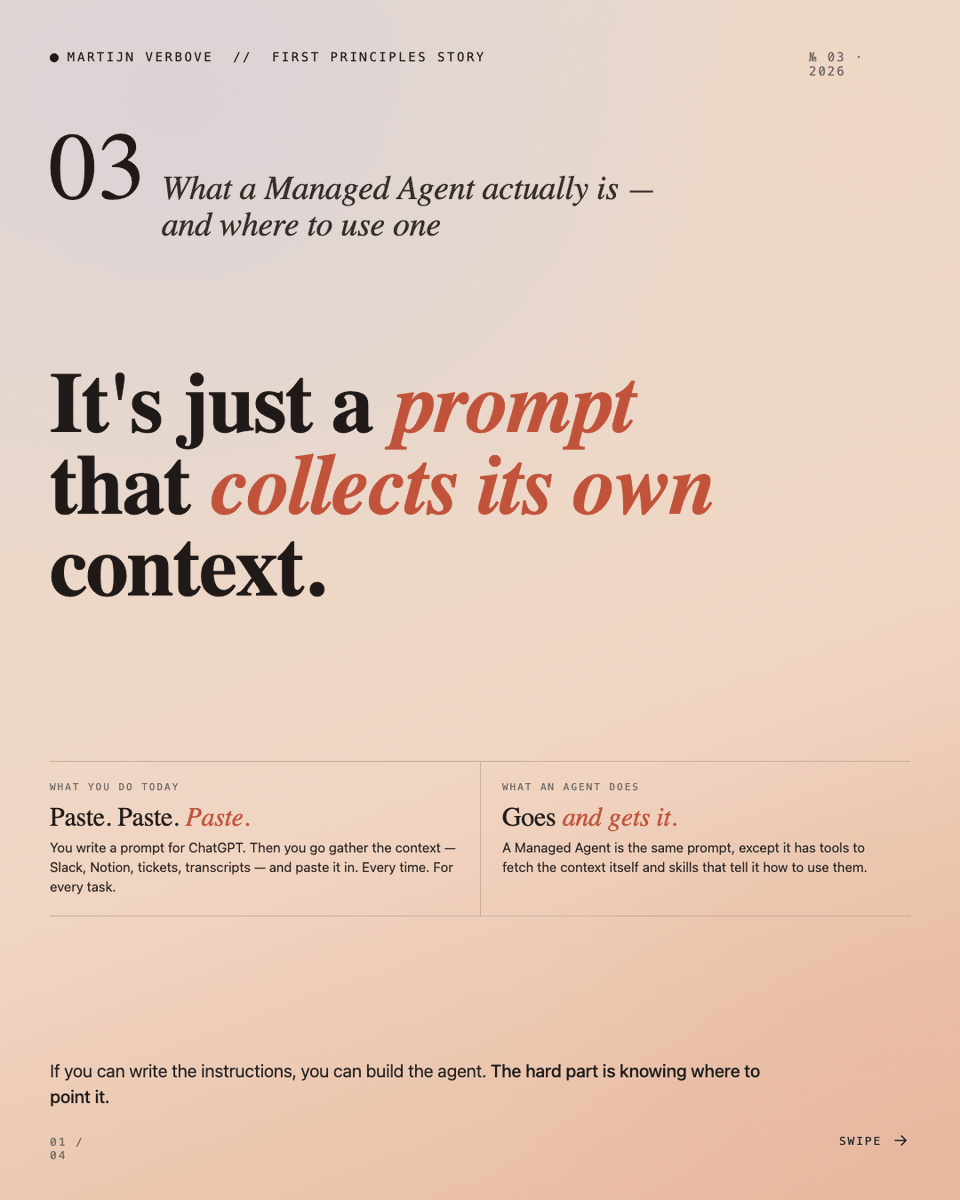
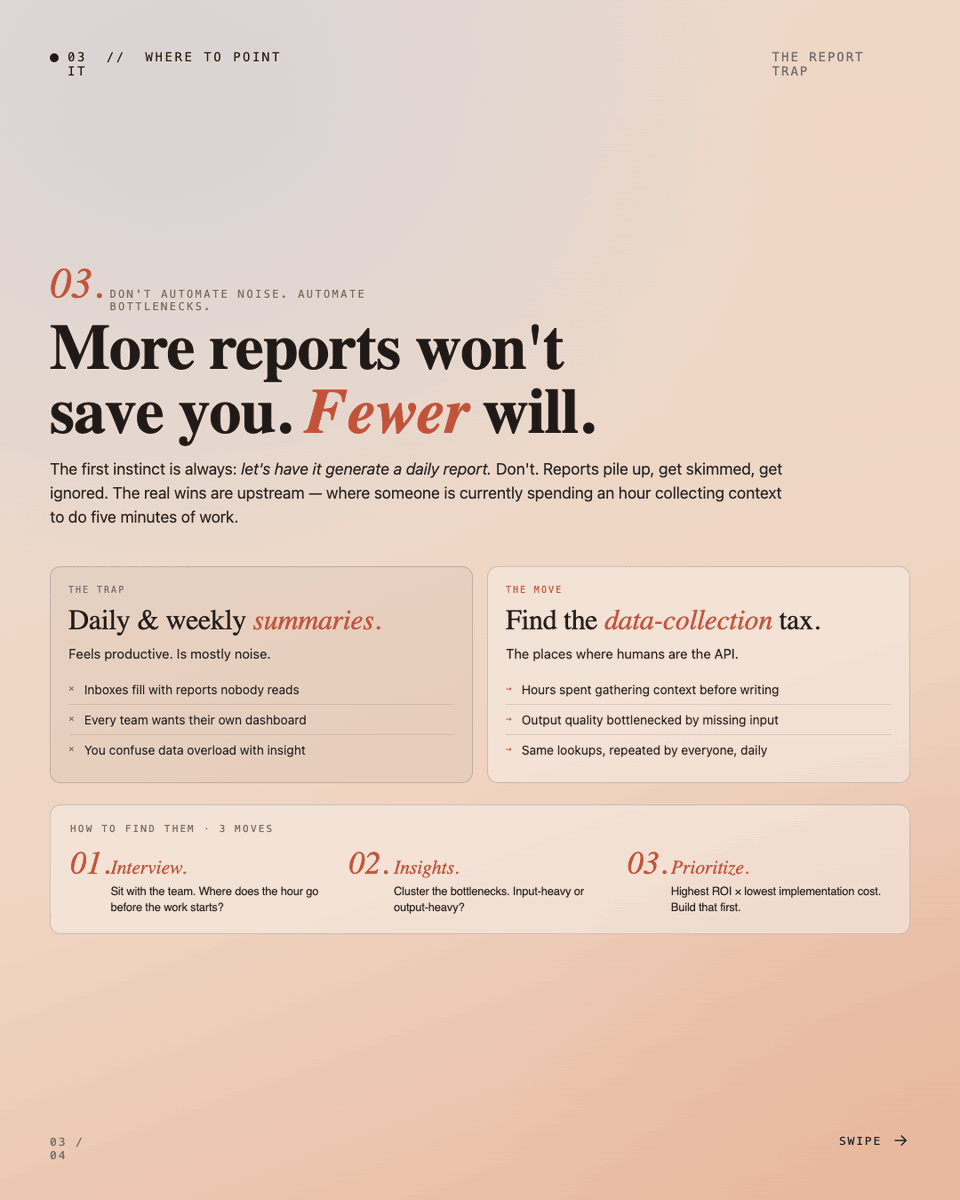
Most "AI agents" are just prompts with extra steps. That's not a dunk. That's the whole point. A Managed Agent is three things: → A prompt. The instructions you'd type into ChatGPT anyway. → Tools. Connectors to Slack, Jira, Intercom, Confluence — so it can fetch its own context. → Skills. Reusable playbooks for how the work gets done. That's it. No magic. The hard part isn't building the agent. It's knowing where to point it. And here's where most teams get it wrong: they point it at reports. Daily summaries. Weekly digests. Dashboards nobody reads. It feels productive. It's mostly noise. The real wins are upstream — at the moments where someone is spending an hour collecting context to do five minutes of work. Five places agents actually earn their keep: • Audit your docs against what support actually told customers this week • Auto-build the internal FAQ from repeated Slack questions • Enrich existing Jira tickets with org-wide context — don't open new ones • Sweep Slack + Intercom + Confluence for stale documentation • Draft the customer follow-up while you're still in the room Notice the pattern? None of them are reports. All of them close a loop a human is currently closing by hand. The architecture (managed in Claude vs. self-hosted with the SDK) matters less than where you point it. Swipe through ↓ for the full breakdown.
Explains managed agents + lists 5 specific high-ROI use cases


Open on X · Boost ♥ · Permanent page
Filed under AI by the model because: Explains managed agents + lists 5 specific high-ROI use cases. The rules.